

High-speed grade versions of our 6000, 6200, and 6800/6900 series deep groove ball bearings: tighter precision (P6–P4), low-mass cages, and greases formulated for sustained high-RPM running. Same bore, OD, and width as the standard-grade bearing, so it drops into the same housing. If your application uses our 6300 or 16000 series, get in touch — high-speed feasibility on those is evaluated case by case.
Precision grade, clearance class, and cage material data for every option, so you can match a bearing to your spindle's rated speed and runout requirement.
Speed-optimized cage and lubrication combinations for motors, fans, and turbines running well above standard deep groove ball bearing speed limits.
Cross-reference an existing high-speed bearing by bore, precision grade, and cage type without guessing at an equivalent.
_1784597120_WNo_918d941.jpg)
A standard deep groove ball bearing and a high-speed variant can share the same bore, OD, and width — the difference is in what happens inside. Tighter roundness and runout tolerances (precision grades P6, P5, or P4) reduce vibration at high RPM. A low-mass cage, typically machined brass or fabric-reinforced phenolic, keeps the balls evenly spaced without adding centrifugal drag. Internal clearance is set to a looser class (C3 or C4) to compensate for thermal expansion at speed, and grease fill and formulation are chosen specifically for low churning loss.
Together, these changes let the same nominal bearing size run meaningfully faster than its standard-grade counterpart before heat and vibration become limiting factors — which is why "high speed" is treated as a configuration on top of the base deep groove design, not a separate bearing type.
Precision tolerances and reduced internal drag allow sustained operation well above standard-grade speed limits.
Tighter roundness and runout tolerances mean smoother running and lower noise at high RPM.
Low-mass cages and speed-rated lubrication cut churning losses that would otherwise limit sustained speed.
Silicon nitride balls lower rotating mass further, reducing centrifugal loading on the outer raceway at extreme speed.
Components are balanced and vibration-graded (Z-value) as standard, not just dimensionally inspected.
Shares bore, OD, and width with the standard-grade equivalent, so it drops into the same housing.
High-speed grade is available on our 6000, 6200, and 6800/6900 series — same envelope dimensions as the standard-grade bearing, upgraded precision and cage/lubrication. Request a quote with your target RPM and bore size.
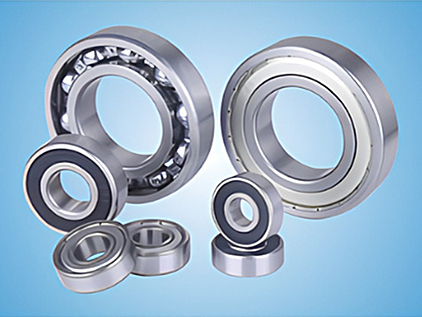
Our most common high-speed request. Standard-grade dimensions with an upgraded precision and cage option for motors and general rotating equipment running above catalog speed.
View 6000 Series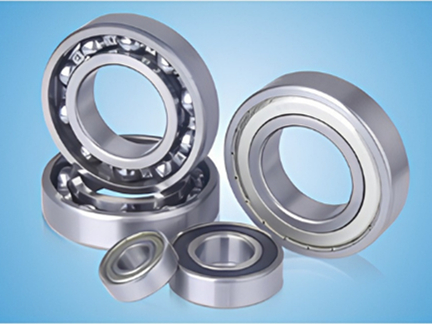
Same high-speed upgrade path as the 6000 series, for applications already using the 6200's larger ball complement.
View 6200 Series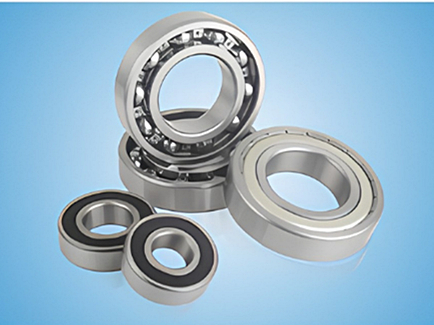
The thin-section design is naturally lighter and lower-drag, making this series a strong fit for high-speed grade — commonly requested for compact spindles and rollers.
View 6800/6900 Series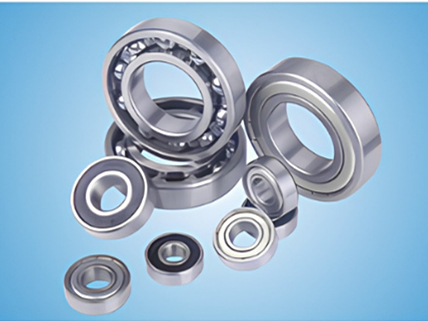
Not a standard high-speed offering. If your application calls for a 6300 (wide, heavy-duty) or 16000 (extra-thin) series at elevated speed, send your requirements and we'll confirm feasibility.
Request Evaluation| Series | Bore Range | High-Speed Grades Offered | Cage Options | Relative Speed Benefit | Best Fit When… |
|---|---|---|---|---|---|
| 6000 | 10–500mm | P6 / P5 / P4 | Steel, brass, phenolic | Moderate–High | General motors, fans, and rotating equipment above catalog speed |
| 6200 | 10–200mm | P6 / P5 / P4 | Steel, brass, phenolic | Moderate–High | Same as 6000, where the application already uses 6200's larger balls |
| 6800 / 6900 | 5–110mm | P5 / P4 | Brass, phenolic | High | Compact spindles and rollers, where low mass already helps |
| 6300 | 10–200mm | Evaluated on request | — | — | Not a standard offering; send requirements for feasibility review |
| 16000 | 12–100mm | Evaluated on request | — | — | Not a standard offering; send requirements for feasibility review |
Standard, low-cost, and robust. Suitable for standard high-speed applications without extreme RPM demands.
Machined for precise ball spacing and good strength; a common choice for the standard high-speed class.
Fabric-reinforced resin, very low mass and self-lubricating; the standard choice for precision and hybrid ceramic classes.
Metered, minimal-quantity oil delivery that minimizes churning loss for the highest-RPM spindle applications.
_1784596576_WNo_600d400.jpg)
_1784596672_WNo_600d400.jpg)
_1784596651_WNo_600d400.jpg)
_1784596778_WNo_600d400.jpg)
Send us your target RPM, bore size, and duty cycle, and we'll recommend the right precision grade, cage, and lubrication combination.
Get a Quote